MULTIETHNIC VS. MULTICULTURAL.
You walk through a city on an ordinary afternoon, or you stand looking at a class photo from your child's school, and there are faces from all sorts of places in that little square, and nothing happens inside you. Or rather, something does happen, but it isn't aversion. It's almost the opposite.
That you feel this way comes, for many of us, from growing up with the image, the story and the sound of Martin Luther King, who stood before the Lincoln Memorial in 1963 and said he dreamed of a day when his children would not be measured by the colour of their skin, but by the person they were inside. For those of us who grew up in the wake of that day, it wasn't a slogan we had to be talked into. It was almost the air we breathed. It lay in the songs, in the films, in the images that time shaped us by, in the way the adults spoke about decency, and we took it in, long before we could put words to it.
A Human was a Human, regardless of what they looked like, and regardless of where they came from. It had value by virtue of one thing alone - that it was a Human - and the only thing that counted was what was inside the Human.
We were born into that feeling, most of us, and we've carried it all our lives as one of the purest things we owned - that a person should not be measured by where their great-grandparents came from. That feeling was right. It's still right. And precisely because it was so right, it became the perfect place to hide something else.
So let me unpack it, so we can look at it together.
For there are two words that resemble each other so closely that over time we stopped hearing the difference.
Multiethnic.
And Multicultural.
It's the same prefix, almost the same form, and we let the similarity in the words stand in for proof of similarity in what they point to.
But "multi" is attached to two vastly different words, and two vastly different categories - and that's the entire case.
'Ethnic' points to origin. Where you come from, who you descend from, your face, the line running backwards through people you've never met.
'Culture' points to something entirely different. It points to what you hold as true, what you bow to, what you call law, what you call holy, how you answer the questions a society must answer uniformly in order to be one society at all.
A multiethnic society is many origins on top of the same ground. You can lay face after face indefinitely, and the house still stands, because what carried the house was never the faces. It was the floor beneath them. The common foundation, the common law, the common language in the public square, the quiet agreement about how we live together, which has become so self-evident that no one can remember it came into being.
A multicultural society, in the strong sense of the word, does something else. It places the difference all the way down at the bottom. Now we are no longer just different in where we came from, but in what we regard as binding.
A society - particularly the Western ones, where we have taken the hardest reckoning with racism of any societies and civilisations - can bear infinite difference in faces. But it cannot bear infinite difference in foundation, for it is precisely the common foundation that makes the difference something we can live together in, rather than something we break apart over.
Notice what that means.
The multiethnic wasn't accommodating in spite of something shared. It was accommodating by virtue of it. The openness was paid for by a common ground, and it was that ground which made it safe to open the door. The multicultural uses that openness while simultaneously removing the floor that financed it. It borrows the moral credit from the first in order to push the second through.
We tell each other that we're continuing the same project. That we've simply become even more accommodating, even more open, gone one step further down the path we've always walked.
But we're doing the opposite.
For where the first expanded our "we", the second dissolves the very question of whether there is a we.
And this is where the word did the work no argument could have done.
No one needed to win a debate about whether a foundation should be shared. They would have lost that debate if it had been conducted openly, because the answer is too obvious. They only needed to let one word lean against the other, long enough for us to stop hearing the difference. Language decided in silence what no one dared put to a vote.
So let's say it quite simply, now that we can see it.
Once the two words became one, the accusation wrote itself. Now doubt about the one could be heard as treachery against the other. The person who questioned the many laws could without further ado be portrayed as someone who wanted rid of the many faces, and then the question was closed before it was asked.
You didn't need to answer it. You only needed to find the right word for the person who asked it. Racist, or something close, someone who was afraid, hardened, on the wrong side of history. The word laid itself over the mouth like a hand, and it worked, because almost no one wants to be mistaken for the worst thing he knows.
And notice who the manoeuvre hit hardest.
The person who had truly taken Martin Luther King to heart, the person who meant it deeply when he nodded to the idea that a person should not be measured by their skin colour, was precisely the one who had to recoil when people were again sorted into groups, each with its own law and its own truth.
The accusation of reducing people to their origin was raised by those whose own project once again made "the group" the most important thing about a person - the thing you see first, and the thing you sort by. As so often, the accusation pointed back at the one making it.
So here is the difference carved out for you -
A multiethnic society asks you to recognise the stranger as one of us.
A multicultural society asks you to stop asking what "us" means.
The first is an invitation into something shared.
The second is the quiet retirement of the shared thing.
We said yes to many faces. Everyone with a big warm heart in their chest does that. But we were never asked whether we also said yes to many new laws from foreign cultures and creeds.
If we had been asked, most would have said - "no thanks, I quite like how things are here".
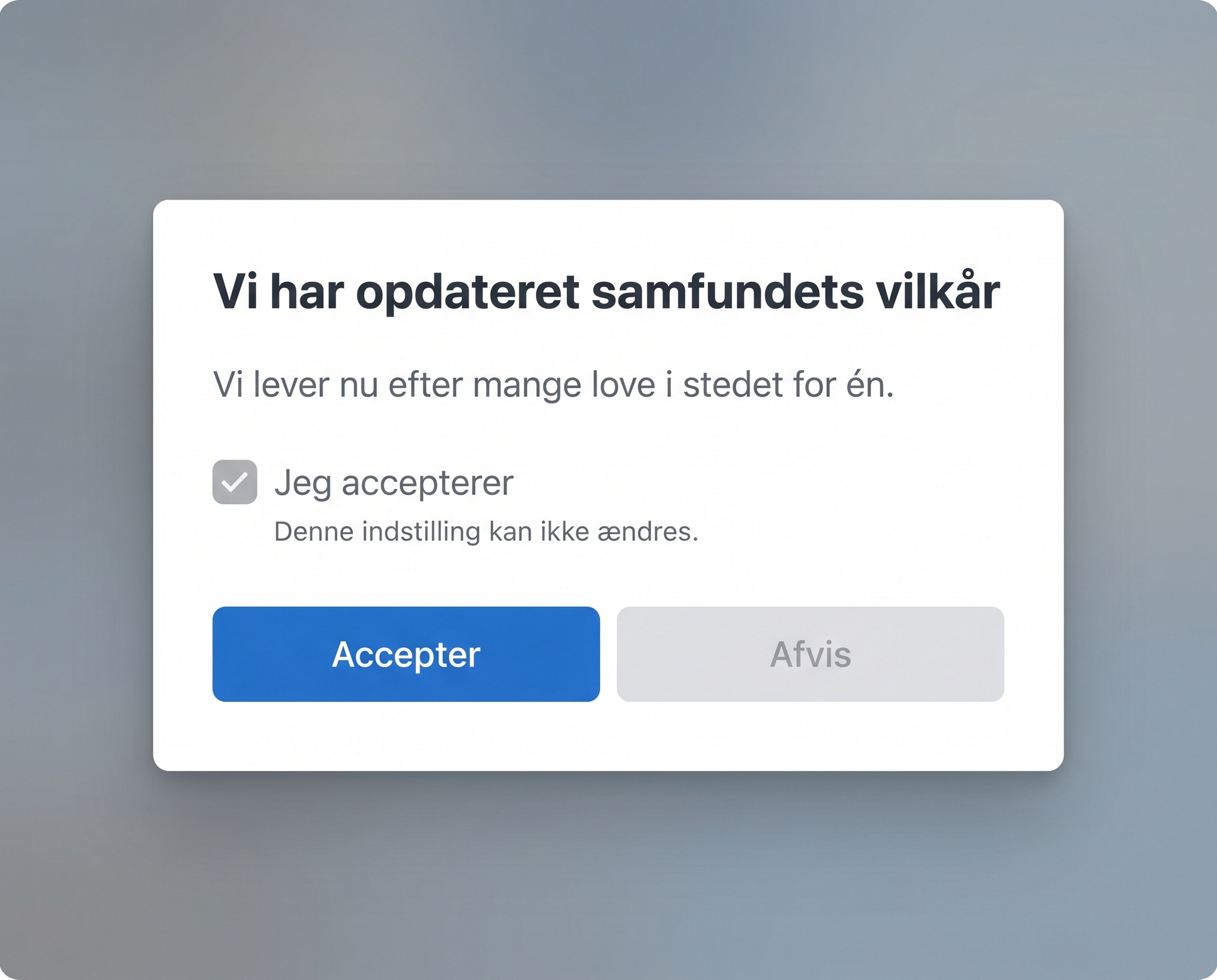
But the checkbox in the popup notification never gave that choice.
❤️🔥🪽