The reality check this week you'll hate.
I was in church yesterday, and the sermon circled around something as seemingly simple and yet so elusive as time.
It wasn't a sermon about years or historical epochs, but about the way time almost always slips past us without making a fuss, like fog that slowly drifts in over a landscape while we continue our tasks believing that everything is as it always was. Only much later do we discover that visibility has changed, and that we no longer stand in the same place we did before.
This fog is occasionally broken by something as banal - and simultaneously as violent - as an iPhone that suddenly appears with a memory, a picture or a video, and without warning pulls the past into the light. You see your children there, ten, fifteen or twenty years younger, with faces, voices and movements that no longer exist in the present, and in that moment you feel the difference between "then" and "now" in your body. Not as a thought, but as a quiet recognition that something irrevocable has moved forward while you yourself believed you were keeping up.
It was in the continuation of this thought that I stumbled upon how peculiar our relationship to time actually is, because even when we intellectually know it passes, we usually live as if it stands more or less still.
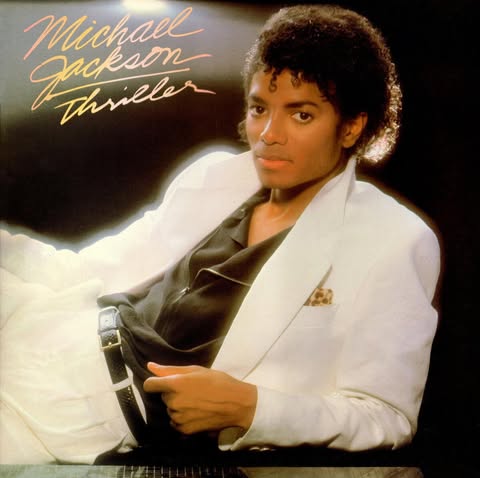
This illusion breaks abruptly when you discover that if you put on Michael Jackson's Thriller today, you find yourself at exactly the same temporal distance from its release as you did in 1982 from music from 1939… 😳😲
It's a comparison that almost feels wrong, and yet it's exact, and in that exactness lies a reminder that time is not merely something we measure, but something we are subject to.
This recognition surfaced again for me when I recently saw a poll where a full 45 percent of the Western population answered that they would rather live in the past than in the future. It wasn't a romantic statement about historical epochs or a longing for simpler times, but a far more serious signal about something that has gone wrong in our collective imagination.
Because it's not that the past was easy, safe or free from suffering, but because the future that is being painted in media and politics these years no longer appears as something that promises more meaning, more beauty, more depth or greater dignity than what we have already left behind.
Perhaps it's because there is constantly, non-stop, twenty-four hours a day, year-round, fear being spoken into us - and everything is built on a premise of distrust of Man.
"We'd better monitor you, so you don't use your freedom for something the system and the paternalism doesn't think is good."
When nearly half of a society turns its gaze backwards and admits that what was seems more desirable than what is coming, then it's not the past that is revealed as idealized, but the present that is revealed as impoverished. It's a sign that we have lost the ability to formulate and tell a future worth striving for, and that we have instead reduced our collective ambitions to administration, regulation, control, surveillance and a constant anxiety about making mistakes.
Such systems can keep something running for a period, but they can never carry a civilization forward, because civilizations are not built by people who long backwards, but by people who believe that what they reach towards is more true, more right and more worth sacrificing for than what they come from.
There was once a Light that shone from the Western horizon, a promise that human life had direction, that history was not merely repetition or random movement, but a place where faith, hope and love could form the basis for progress, both spiritual and material.
This Light was not naive, and it did not deny suffering or evil, but it insisted that the future could be better, precisely because man was called to responsibility, courage and creative action. When this light weakens, and the future is instead presented as something to fear, administer or keep in check, societies inevitably begin to turn towards the past - not to learn from it, but to seek refuge in it.
History shows us again and again that both people and civilizations who live in the past slowly lose their vitality and end in depression. They repeat, they preserve, they protect, but they do not create, and without creation there is no renewal, and without renewal decay sets in, quietly and almost imperceptibly, until it is suddenly obvious to everyone.
If we wish to avoid this fate, we must again find the courage to imagine and formulate a future that is greater than our fear, and which builds on the best that the Western world is founded upon, not as a museum, but as a living foundation.
Taking reality back therefore does not mean returning to what was, but rediscovering the ability to point forward, with clarity, with hope and with the will to bear the responsibility that any true future presupposes.
Because when our children one day look back at us, through their own digital memories, through pictures and videos that break through time's fog, they will not ask whether we preserved the status quo, or whether we administered fear effectively.
They will ask whether we left them a future that was worth entering into, worth sacrificing for, and whether the world we passed on was richer, freer and more alive than the one we ourselves inherited.
And perhaps that's exactly where the Thriller-recognition ultimately lands. Not only as a curious reminder of how quickly time passes, but as a quiet demand on us who live now - who can remember that explosion of life, expectation, joy, hope and faith that surrounded that period - that the future our children will one day call the past must be better than the one we ourselves came from.
Have a really good week, fellow time travellers 😅🤓❤️