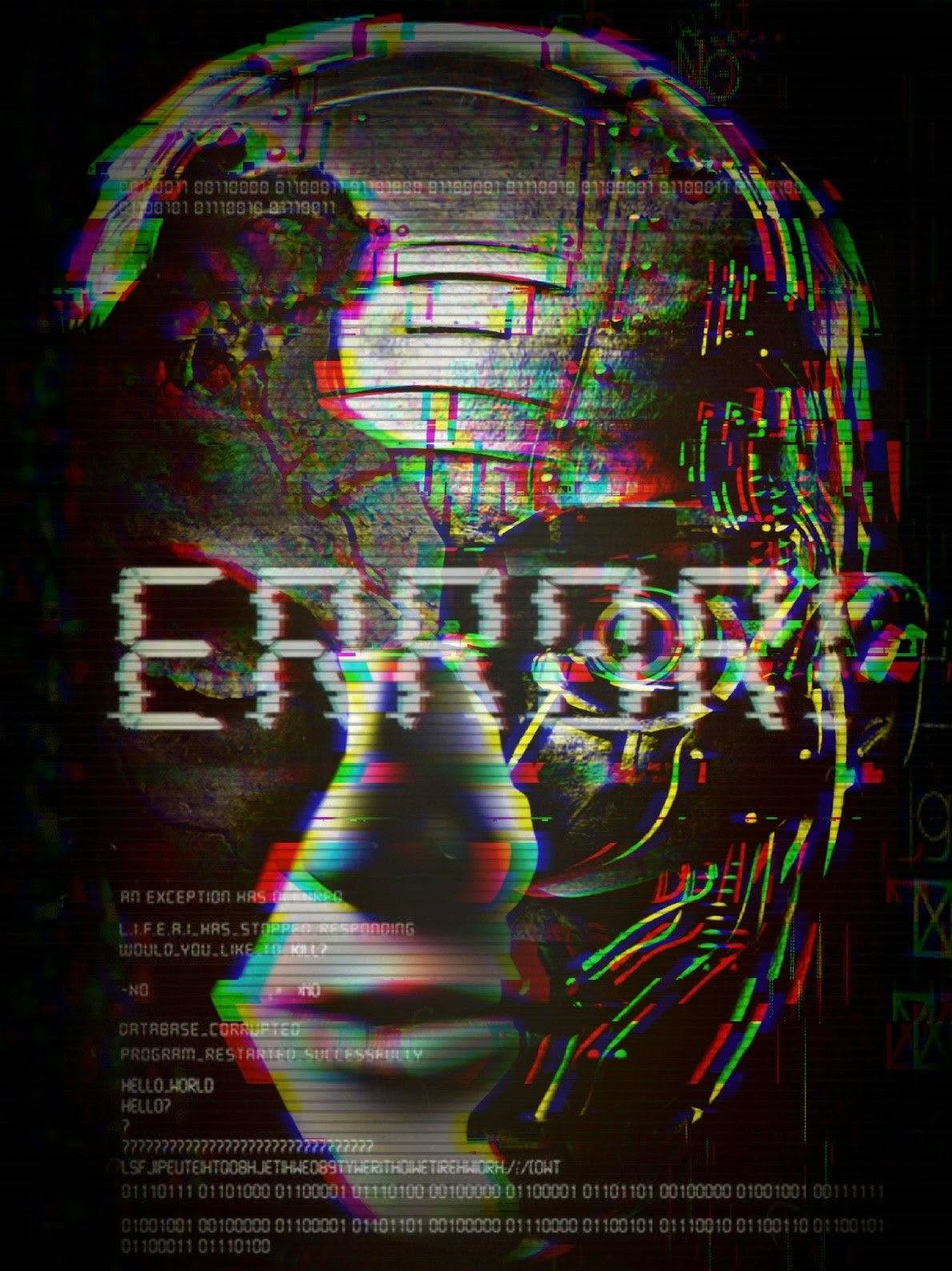
I work with artificial intelligence every single day, and not in one lane, but down through nearly everything I do.
It ideates with me and against me, analyses, drafts, refines and elaborates, finds the hole in a line of reasoning before I see it myself, and it does so just as effortlessly in image, sound and video as in text.
It has taken over most code across systems, including several I don't master myself, and stitches them seamlessly together, so that I - together with a range of agents - on an ordinary day can accomplish what a few years ago required a team of ten - some days with video - twenty people. And even then, when I see what others are doing around the world, I'm still only using the tip of what's possible.
Ten years ago, all of this was science fiction. Today I open it like I open a notepad. I've built a system around it with decades of thoughts, notes, music, design, reference points, solutions, relationships, events and insights wired together in a kind of neural network, where each node connects to what relates. I speak with it - just as it calls me with updates, questions and status reports on progress.
And yet I know exactly what awaits the experience I'm sitting with now.
In ten years I'll look at it the way I today look at a Nokia 3310 lying forgotten in a drawer that once felt like the future itself.
Clumsy, slow, touchingly primitive. It's hard to understand now. But that's how it goes with wonders. We get used to them in a week and smile at them ten years later.
I thought that was actually the whole story I wanted to share today. That this was just another piece of technology on its way toward its own obsolescence.
Then something happened this week that I'd seen coming - but still hoped wouldn't become reality.
Friday afternoon, the AI company Anthropic received a letter from the American government. The content was an export control order. It read, translated, something like -
No foreigner may any longer have access to their two strongest models, Fable and Mythos, neither outside the US nor inside the country, and that includes the company's own employees if they're not American citizens.
The justification was 'national security'. And within a few hours, the models were shut down for everyone, including Americans - because you can't (yet) tell the difference in real time between a foreigner and a citizen behind a screen.
Notice what just happened to the category here.
The same machine I use as a notepad was classified Friday evening in the family alongside weapons and strategic raw materials.
What I communicate with and spend my time with every day to create, as if it were a colleague, is regarded by a state as ammunition.
Both things are true at once, and that's the new condition - we're going to live among tools that are simultaneously the most intimate and the most weaponised thing humanity has ever held in its hand.
And then it actually gets even more interesting, because the justification doesn't quite fit the action.
The danger being pointed to is a method to bypass the model's safety guardrails. But Anthropic itself says the same method probably works on other publicly available models that aren't hit by the ban, and they had to shut down for their own citizens immediately. The danger sits in the machine, not in nationality. When the line is drawn between citizen and foreigner anyway, the letter is about something other than safety.
It's about WHO gets to hold the era's strongest tool.
And HERE I now sit in Europe and watch - because the worst thing about the picture is that no one did this to us. We did it ourselves. While the technology that now determines power relations between nations grew before our eyes, we chose to administer it, legislate about it, raise frameworks and prohibitions around it, long before we'd built so much as a single usable model of that scale.
We regulated a future we weren't part of creating, and we called it "leadership".
And simultaneously, with a blindness whose reach is hard to grasp, we tore down the foundation this entire future rests on. Germany shut down its last nuclear power plants in 2023 and called it progress, precisely in the years when the world was discovering that intelligence at this scale is first and foremost a hunger for power. One half of the globe built capacity. The other shut it down and wrote endless rules for those who built.
And the result can be read directly.
The best language model Europe has produced, French Mistral, doesn't even fight on the same field as the American and Chinese ones, but lies far down the lists, outside the company where decisions are made. It's a hobby project by comparison.
Think about the shift that's occurred. The part of the world that gave humanity the very thought that reality has an order you can reason your way toward has become a spectator to the machines that now reason. Or as Canadian Prime Minister Mark Carney put it in Davos - if you're not at the table, you're on the menu.
And we're not at the table.
And in addition, in an incomprehensible idiocy, are pushing the US away from us.
And it's not because it couldn't be done, that we sat at the table. One of artificial intelligence's own founders, Yoshua Bengio, said it plainly recently - the moment a part of the world understands that something is an existential risk, the way we finally understood it with Ukraine, then the money is suddenly there.
It's about will, not capability. We had the means. We lacked the vision.
And the distance is now growing faster than we can even manage to talk about closing it - because capital, power, talent and computing capacity pull in the same direction and amplify each other with every single month that passes.
We told ourselves artificial intelligence was a tool, a convenience, a toy that just kept getting better and better.
We mistook the category.
Others closed the door on us Friday evening. But we'd given away the key long before, back when we confused caution with wisdom and called our own powerlessness responsibility.
We ended up as the part of the world that writes the rules for others' future and must ask permission to even touch it.
❤️🔥🪽
…
In addition. Did you hear a single politician at the recent parliamentary election talk about AI? Just one? And if there was one - one with experience, insight and grasp of the comprehensive transformation of reality we're facing?